

BRICS expands in 2025 with new member nations. Learn how this shift could reshape world trade, geopolitics, and economic balance.
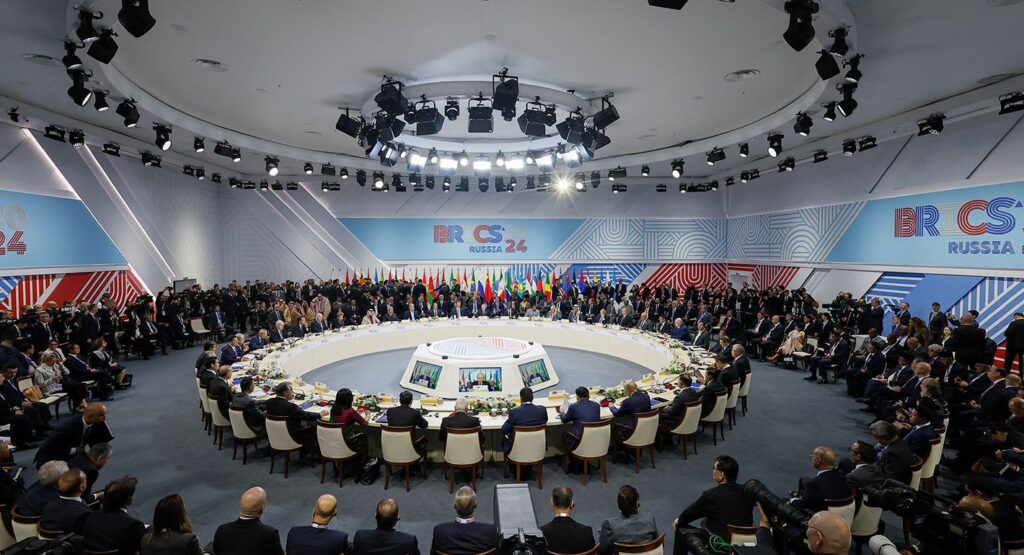
BRICS Expansion 2025: A Turning Point in Global Trade
The global economy in 2025 is undergoing a major shift with the expansion of the BRICS alliance. Originally formed by Brazil, Russia, India, China, and later joined by South Africa, BRICS has now welcomed new members from the Middle East, Africa, and South America. This expansion signals a bold move to challenge the dominance of Western-led financial institutions like the International Monetary Fund (IMF) and the World Bank.
With its new members, BRICS now accounts for a much larger share of global GDP, international trade, and oil production, making it one of the most influential economic blocs in the world. This development could have far-reaching effects on global trade patterns, investment strategies, and even the dominance of the U.S. dollar.
Why BRICS Expanded in 2025
The expansion of BRICS was not an overnight decision—it was the result of years of negotiation and global dissatisfaction with the way Western financial systems operate. Many developing countries feel underrepresented in the IMF and World Bank, where voting power heavily favors the U.S. and European nations.
By expanding, BRICS now aims to:
- Provide alternative financing for infrastructure and development projects.
- Reduce dependency on the U.S. dollar by promoting trade in local currencies.
- Strengthen South-South cooperation between emerging economies.
- Build political influence as a counterbalance to Western alliances like the G7.
The New Members and Their Role
While the exact list of new members varies depending on the source, reports confirm that Saudi Arabia, Egypt, Argentina, Nigeria, and the United Arab Emirates (UAE) are among those joining the bloc. Their inclusion brings:
- Saudi Arabia & UAE – Huge influence over global oil markets.
- Nigeria – Africa’s largest economy and most populous nation.
- Argentina – South America’s key agricultural power.
- Egypt – Strategic location connecting Africa, the Middle East, and Europe.
With these additions, BRICS now controls an even greater share of energy resources, agricultural trade, and manufacturing capacity.
Impact on Global Trade
The most immediate impact of the expansion is likely to be seen in trade settlements. BRICS countries are actively working to reduce dependency on the U.S. dollar by creating payment systems based on local currencies or even exploring a common BRICS currency.
This could significantly alter global trade flows:
- Developing nations may find it easier to trade without relying on costly U.S. dollar conversions.
- Western sanctions may become less effective, as BRICS nations create alternative banking networks.
- Global supply chains could shift as BRICS strengthens intra-bloc trade agreements.
Opportunities for Developing Nations
For smaller and developing countries, the expansion offers new opportunities. BRICS’ New Development Bank (NDB) provides loans for infrastructure, renewable energy, and industrial growth without the strict conditions often imposed by the IMF.
This is particularly attractive to African and Asian nations that are seeking financing for projects like railways, highways, and digital infrastructure. The promise of less political interference and more affordable loans could make BRICS an appealing partner.
Challenges Facing BRICS
Despite its growing strength, BRICS faces significant challenges:
- Diverse Political Systems – From democracies to monarchies and communist states, uniting members under one vision is difficult.
- Internal Rivalries – India and China, two of BRICS’ strongest members, continue to have geopolitical disputes.
- Economic Instability – Some new members like Argentina face severe inflation, which could weaken the bloc’s credibility.
- Western Resistance – The U.S. and EU are unlikely to sit back quietly as BRICS grows in influence, and may impose countermeasures.
Geopolitical Implications
The BRICS expansion is more than just economic—it has geopolitical consequences. The bloc could become a powerful counterweight to Western alliances like NATO and the G7.
If BRICS successfully creates its own currency or strengthens its payment systems, it could reduce the U.S. dollar’s global dominance, reshaping international finance. This could mark the beginning of a multipolar world order, where no single country or alliance dominates global politics.
Final Verdict
The 2025 BRICS expansion is a historic moment in global trade and geopolitics. By adding powerful new members, the bloc is not only increasing its economic weight but also signaling a shift toward greater independence from Western institutions.
For developing countries, this presents an opportunity for fairer trade and alternative financing. But for the world at large, it raises important questions: Will BRICS succeed in creating a new global financial system, or will internal divisions limit its potential?
One thing is clear: the balance of power in global trade is changing, and the BRICS expansion of 2025 will be remembered as a turning point in that journey.